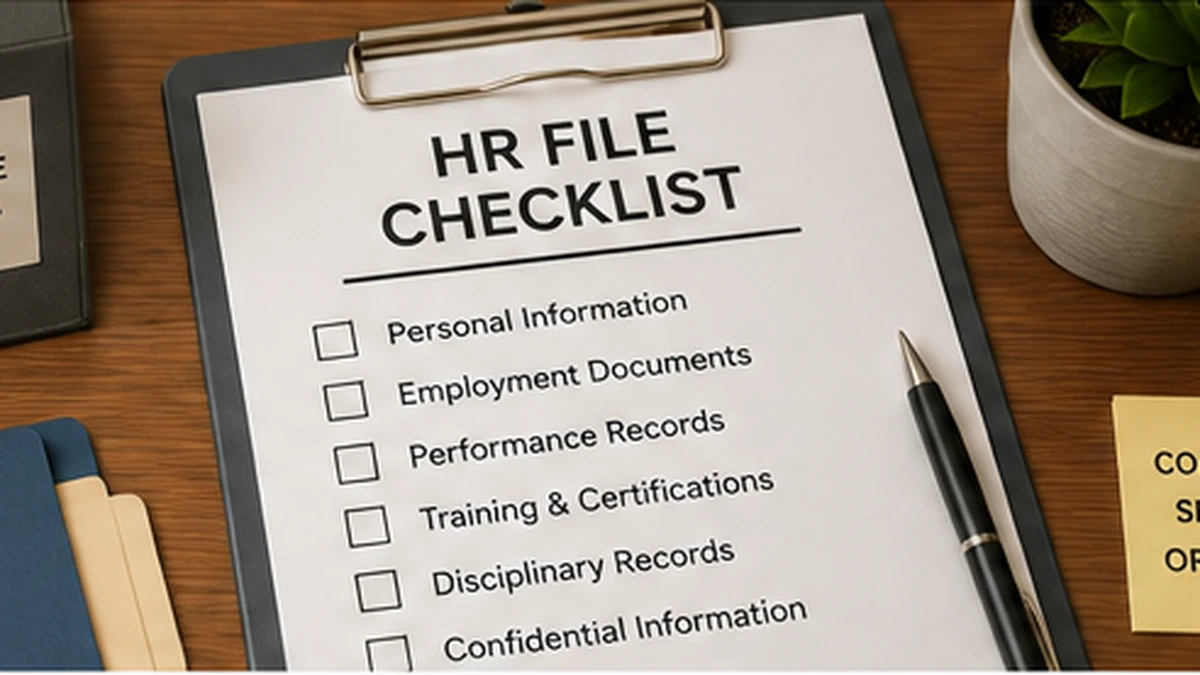
Primary Keyword: Arizona new hire checklist
Hiring a new employee is exciting, but the administrative side of the process is easy to underestimate. In Arizona, onboarding involves more than sending an offer letter and choosing a start date. Employers need a repeatable process for employment eligibility, state reporting, payroll setup, policy acknowledgments, required notices, records, and the employee’s actual first-day experience.
A consistent Arizona new hire checklist helps Phoenix employers reduce missed deadlines and create a more professional welcome for every employee. It also makes future audits, unemployment inquiries, payroll questions, and employee-relations issues easier to manage because the documentation is already organized.
Premier HR Services provides onboarding and labor-regulation support for Phoenix-area businesses and virtual clients nationwide. The service includes new-hire paperwork, I-9s, E-Verify processing, state and federal new-hire reporting, handbook acknowledgments, and a consistent onboarding checklist.
Quick Answer: What Should Be on an Arizona New Hire Checklist?
Confirm the offer and job details before the employee starts.
Complete Form I-9 on time and use the current form and instructions.
Run E-Verify for the new employee as required by Arizona law.
Report the new hire or rehire to Arizona within the required reporting window.
Set up payroll and tax withholding before the first payroll is processed.
Provide required policies, notices, and handbook acknowledgments.
Document compensation, classification, schedule, and job expectations.
Set up personnel and payroll records consistently.
Plan the first day and first two weeks so onboarding is operational, not just administrative.
Assign responsibility for follow-up items such as training, benefits, performance expectations, and missing documents.
1. Finalize the Offer, Job Description, and Classification
Before collecting onboarding documents, confirm the terms of employment. The written offer should match what managers, payroll, and the employee understand about the role.
Job title and core responsibilities
Start date and normal work location
Pay rate or salary
Expected schedule
Supervisor or reporting relationship
Eligibility for benefits, if applicable
Exempt or non-exempt status
The classification decision deserves particular attention because wage-and-hour rules affect overtime eligibility and recordkeeping. Premier HR’s recruiting service includes compensation analysis, job descriptions, position classification, screening, and reference checks.
2. Complete Form I-9 Within the Federal Timeframes
Every U.S. employer must complete Form I-9 for new employees hired for work in the United States. According to USCIS Form I-9 guidance, the employee completes Section 1 no later than the first day of employment, and the employer generally completes Section 2 within three business days after the employee begins work for pay.
Do not tell an employee which acceptable documents to present. The employee chooses from the Form I-9 Lists of Acceptable Documents. Employers should also use a consistent storage and correction process so I-9 records can be produced if they are ever inspected.
3. Use E-Verify for New Arizona Employees
Arizona adds a state-specific onboarding requirement. The Arizona Attorney General’s guidance for employers states that Arizona employers are required to use E-Verify for new employees hired after December 31, 2007.
Form I-9 and E-Verify are related but not interchangeable. The I-9 documents the employment-eligibility verification process; E-Verify electronically compares information from the I-9 with government records. A reliable onboarding workflow should make sure both steps are completed correctly and consistently.
4. Report the New Hire or Rehire to Arizona
Federal and Arizona law require employers to report newly hired and rehired employees to the Arizona New Hire Reporting Center. The Arizona Department of Economic Security states that the report is due within 20 days of the hire date.
This reporting requirement applies to rehired employees as well as first-time hires. Making it a standard onboarding task is easier than relying on someone to remember it later.
5. Set Up Payroll Before the First Pay Period
Payroll setup should be completed before the employee reaches the first payroll cutoff. Collect the applicable federal and state withholding information, verify the employee’s legal name and Social Security number for payroll purposes, enter compensation correctly, and confirm the pay schedule.
Also confirm whether the employee will track hours and which system or process applies. Accurate time and wage records are essential for non-exempt employees.
Premier HR’s payroll processing service handles payroll tax reporting, W-2 and 1099 preparation, time tracking integration, state unemployment insurance, and agency inquiries.
6. Provide the Employee Handbook and Collect Acknowledgments
The employee should receive the policies that govern the workplace, and the employer should document that the employee received them. Common onboarding topics include attendance, timekeeping, harassment and discrimination, leave, technology use, confidentiality, safety, complaint reporting, standards of conduct, and other company-specific expectations.
A handbook acknowledgment does not replace good policy administration, but it creates a record that the employee received the rules. Premier HR provides employee handbook and policy development with acknowledgment tracking and annual review as labor laws change.
7. Give Required Notices and Explain Key Workplace Policies
New hires should know how to find the policies and notices that affect them. Required postings and notices can vary based on employer size, industry, location, and the laws that apply to the business.
For Arizona employers, this may include current wage and earned paid sick time notices, federal equal-employment notices, unemployment information, and other required workplace postings. The Industrial Commission of Arizona employer resources and federal agencies provide current official materials.
8. Create the Employee Record Correctly From Day One
A new employee creates multiple categories of records. Do not put every document into one file and assume the job is done. Establish a consistent recordkeeping structure that separates information when appropriate.
Personnel records: offer, job description, acknowledgments, performance documentation, and general employment information.
Payroll and time records: wages, hours, deductions, pay-period data, and payroll forms.
Form I-9 records: many employers store these separately for easier inspection and privacy control.
Medical or accommodation information: should be handled confidentially and separately when required.
Training records: completion dates, certifications, policy training, and safety training as applicable.
The U.S. Department of Labor’s FLSA recordkeeping guidance requires covered employers to maintain accurate wage and hour records for covered non-exempt employees, while the EEOC publishes separate recordkeeping requirements for covered employment records.
9. Plan the First Day and First Two Weeks
Compliance paperwork matters, but onboarding should also help the employee become productive. A new hire who spends the first day waiting for passwords, equipment, instructions, or a supervisor receives a clear message that the company was not ready.
Before the start date, confirm:
Workspace, equipment, and system access
Email and software accounts
Who will greet the employee
First-day schedule
Required training
Role priorities for the first week
Who answers payroll and HR questions
Check-ins with the manager
Premier HR notes on its onboarding service page that a new hire’s first two weeks set the tone for the employee’s experience. A good checklist handles compliance and the human side together.
10. Schedule Follow-Up Instead of Treating Onboarding as a One-Day Event
Some onboarding steps happen after the start date. Schedule reminders for benefits enrollment deadlines, training, missing documentation, 30-day check-ins, performance expectations, and any certifications that require renewal.
This follow-up matters most in small businesses where managers wear several hats. Without a defined owner for each task, important items can disappear between HR, payroll, and operations.
Common Arizona New Hire Mistakes to Avoid
Waiting too long to complete Form I-9. The federal timing rules begin with the employee’s start date.
Treating E-Verify as optional in Arizona. Arizona law requires employers to use it for new employees.
Forgetting Arizona new hire reporting. The state reporting deadline is 20 days from hire.
Using different onboarding paperwork for different employees. Inconsistency creates gaps and can create fairness concerns.
Skipping handbook acknowledgments. If a dispute occurs later, the company should be able to show which policies the employee received.
Failing to set up timekeeping before work begins. Employers need accurate records of compensable time.
Mixing sensitive medical information into the general personnel file. Confidential records may require separate handling.
Make Every New Hire Easier to Manage
A strong onboarding process protects the business and improves the employee experience at the same time. The goal is not more paperwork. It is a predictable system where every required task happens on time, every record has a place, and every new employee knows what to expect.
Phoenix-area employers that want help building or managing the process can explore Premier HR Services’ onboarding and labor-regulation support, payroll processing, and outsourced HR services, or contact Premier HR Services to discuss a customized HR plan.
Important: This article is for general educational information and is not legal or tax advice. Employment requirements vary based on employer size, industry, location, workforce, contracts, and other facts. Confirm current requirements with the appropriate government agency or qualified legal counsel.
Frequently Asked Questions
How soon must an Arizona employer report a new hire?
The Arizona Department of Economic Security states that newly hired and rehired employees must be reported to the Arizona New Hire Reporting Center within 20 days of the hire date. Employers should make this a standard onboarding task rather than waiting until payroll or quarter-end.
Do Arizona employers have to use E-Verify?
Yes. The Arizona Attorney General states that Arizona law requires employers to use E-Verify for new workers hired after December 31, 2007. E-Verify does not eliminate the employer’s Form I-9 responsibilities; both processes need to be handled correctly.
What is the easiest way for a small business to manage onboarding compliance?
Use one written checklist with assigned owners and deadlines for the offer, Form I-9, E-Verify, new hire reporting, payroll, policies, record setup, training, and follow-up. If the business does not have dedicated HR staff, an outsourced HR department can manage the process consistently while giving employees and managers a direct HR resource.